
The Royal Dish
Kozhikode Dum Biryani: A Traditional Taste of Malabar
In the past, wedding and special-occasion meals were often simpler than the elaborate feasts we see today. Among the dishes that held a special place on festive tables was dum biryani, traditionally enjoyed with accompaniments such as chutney, curd, and small, sweet Poovan bananas. Kozhikode Dum Biryani is one of the most cherished dishes in the culinary heritage of Kozhikode. Closely associated with Malabar’s Mappila food tradition, it is known for its fragrant aroma, tender meat, and carefully balanced spices. Unlike some richer and hotter biryanis, the Kozhikode style is generally mild, allowing the natural flavours of the rice, meat and spices to shine through. Kaima, also known as Jeerakasala rice, is a fragrant short-grain variety widely used in Malabar biryanis and gives the dish its distinctive character. The slow dum-cooking process brings the ingredients together beautifully, making Kozhikode Dum Biryani more than a festive meal—it is a delicious expression of Malabar’s hospitality and food culture.
Method of Cooking Kozhikode Dum Biryani
The traditional method of preparing this dish was a slow and carefully controlled process that depended greatly on the cook’s experience. A simple hearth was made using three stones, and a large, specially shaped Indalium vessel was placed over it. The marinated raw meat was arranged at the bottom of the pot, while partially cooked Kaima or Jeerakasala rice was layered on top. The pot was then covered with a tight-fitting lid and sealed with maida dough to prevent steam and aroma from escaping.
Dried coconut shells were used as fuel, providing steady heat for the cooking process. After the initial cooking period, the fire was reduced or extinguished, and hot charcoal was placed over the lid. This created heat from above and completed the traditional dum cooking process. Skilled cooks carefully judged the heat and cooking time, relying on experience and precise calculations. When the pot was finally opened, the rich aroma of meat, rice, and spices filled the surroundings. The fragrant rice was then gently transferred to another vessel and served.
This traditional cooking method remains an important part of the heritage and character of Kozhikode Dum Biryani.

Dum Biryani
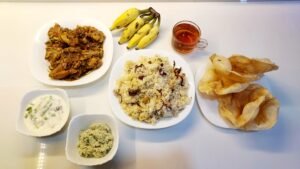
Savoury001.in
Here is a video of how to make this dish on a gas stove.
In those days, the special bowl in which the dish was served was called a ‘Saan’ ( a large plate in a round shape). People would sit in a circle around the food served in the Saan. This tradition is called ‘Maasara’.
Special biryanis are often prepared during joyful gatherings and memorable celebrations. In many families, biryani becomes the heart of the table during weddings, festivals, Eid celebrations, birthday parties, and family get-togethers. It is also commonly served when guests visit home, as offering biryani is considered a warm gesture of hospitality and care. In Kozhikode, biryani is closely connected with celebrations, where the rich aroma and flavorful taste bring people together and make occasions feel even more special.
INGREDIENTS
Cooking oil ¾ cup
Medium size onion 5 Nos
Cinnamon (1 inch) 2 pieces
Cloves 5 Nos
Cardamom 3 Nos
Cashew nut 25 gram
Raisin 25 gram
Kayama rice 3 cups
Salt (for rice) 14 gram
Crushed garlic 2 tbsp
Crushed ginger 1&half tbsp
Crushed green chilly 3 tbsp
Salt (gravy) 1 tbsp
Sliced tomato ½ cup
Lemon juice 1 tbsp
Coriander powder 1 tbsp
Curd 2/3 cup
Biryani powder ¼ tbsp (gravy)
Turmeric powder ¼ tbsp (gravy)
Chopped Coriander leaves ½ cup
Chicken (Biryani cut) 1 kg
Biryani powder 1& a half tsp